
Interior renovation in Dubai
Floors, ceilings, joinery, lighting and finishes: describe the rooms and a partner contractor visits to quote the interior work.
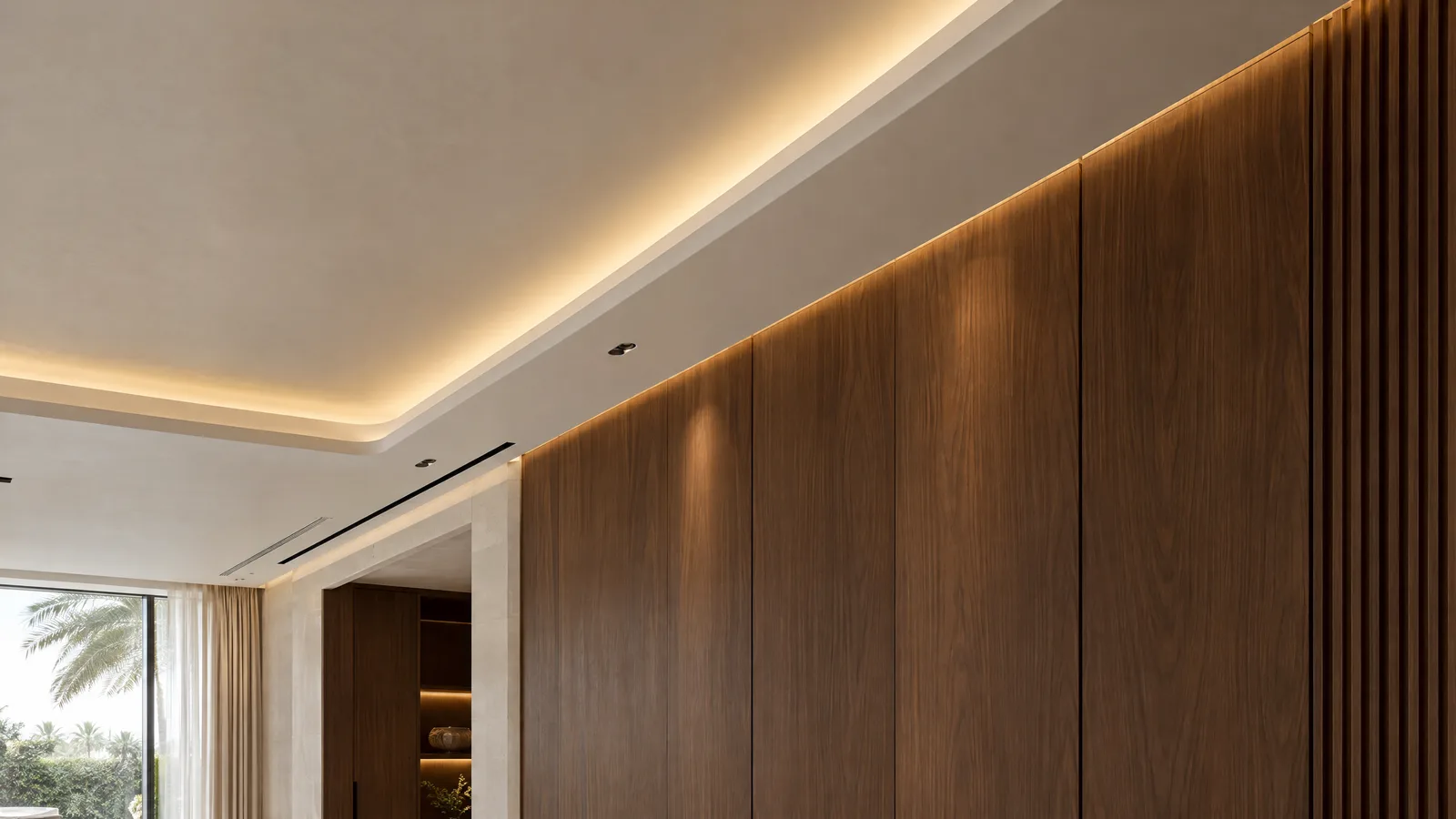
Interior renovation in Dubai changes the finishes and fittings inside a villa or apartment: flooring, gypsum ceilings, lighting, wall finishes and built-in joinery, usually without moving walls. A partner contractor visits, quotes, signs the contract with you and does the work, and Dubai Renovations takes the enquiry and writes the brief. The scope turns on which rooms change, what sits above the ceiling, and what your building or community approves.
It suits a home that is sound but dated, or one you have just bought and want to make your own.
What does interior renovation cover?
Most interior renovation jobs in Dubai combine several of these across a few rooms, such as new flooring through the ground floor with ceilings and lighting in the living areas. Kitchens and bathrooms have their own pages because they add plumbing, drainage and waterproofing.
- Flooring: porcelain tiles, engineered wood, vinyl or stone
- Gypsum false ceilings, cove lighting and new light fittings
- Wall finishes: paint, panelling, wallpaper and feature walls
- Built-in wardrobes, TV units, doors and other joinery
- Skirting, handles, switches and sockets
Is interior renovation the same as a fit-out?
In Dubai the words overlap, and the Dubai Building Code draws the line more precisely than everyday use does. It classes a change to linings or finishes, with no reconfiguration of internal spaces, as a renovation. A fit-out of a space or unit, or a change to a service system such as lighting circuits or AC, is a modification. Both are covered by the code and by the UAE Fire and Life Safety Code.
In practice, fit-out usually means finishing a space from shell or near-shell condition, common with offices and some new units. Interior renovation means changing a home that is already finished, which starts with removing what is there and protecting what stays.
| Work | Examples | Dubai Building Code class | Approvals to check |
|---|---|---|---|
| Finishes | Paint, new flooring, wallpaper, panelling | Renovation: linings and finishes, no spaces reconfigured | Building management's NOC in an apartment; interior painting needs no NOC in Arabian Ranches |
| Ceilings and lighting | Gypsum false ceilings, cove lighting, new circuits | Modification where a service system changes | Building or community approval, and access kept to AC units above |
| Joinery | Wardrobes, TV units, doors and wall panels | Renovation where no space is reconfigured | Check the joinery is listed in the building or community application |
| Fit-out from shell | Finishing a unit from bare structure | Modification: a fit-out of a space or unit | Drawings for building management and, in Dubai Development Authority areas, a building modification permit |
Where do AC units sit above a false ceiling?
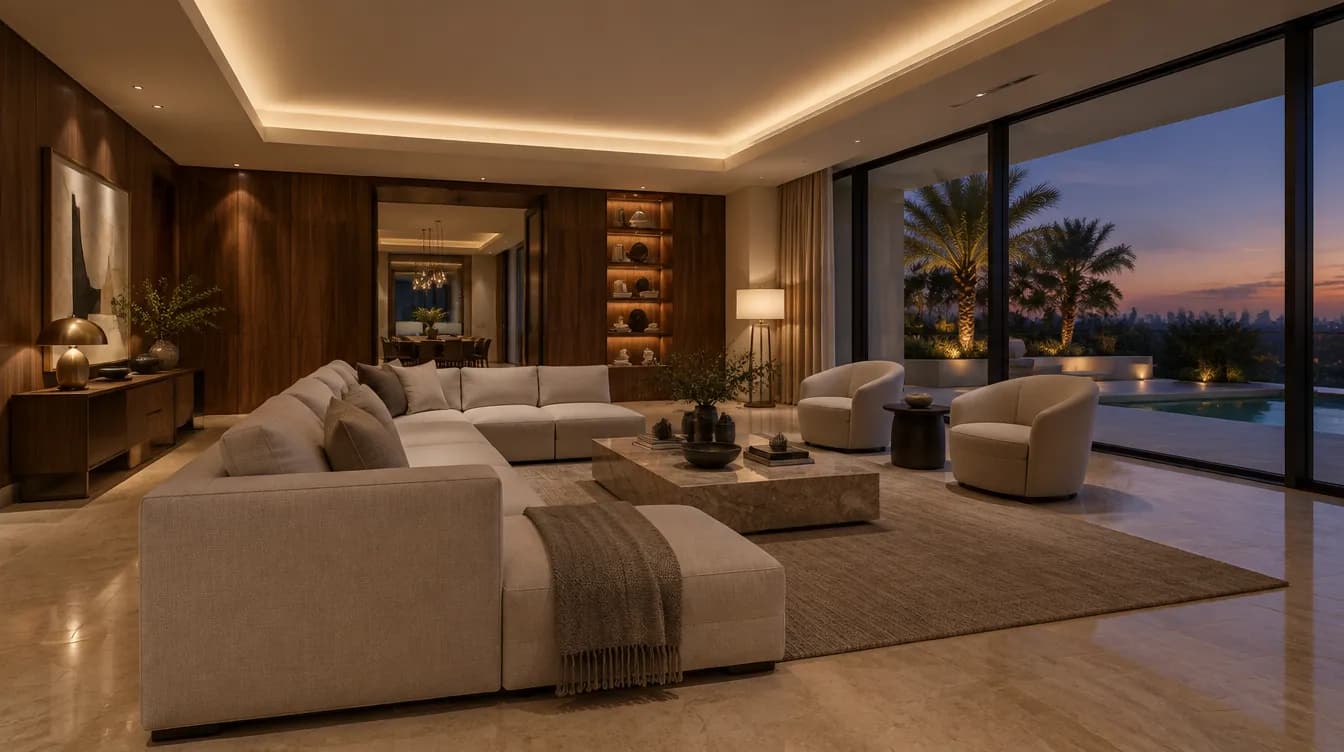
Gypsum ceilings hide AC ducts and give room for recessed lights, which is why they appear in so many Dubai homes. The detail that matters later is access: fan coil units and valves above the ceiling need service panels in the right places. For residential apartment buildings, the Dubai Building Code places fan coil units in wet areas to limit leak damage, so check the ceilings of bathrooms and kitchens before redesigning them.
Part K of the code also asks for refrigerant, hot water and chilled water pipes, and ducts carrying conditioned air, to be insulated to prevent condensation. When an interior renovation opens a villa ceiling, ask the partner to look at the duct and pipe insulation while it is exposed, since a dripping duct stains a new gypsum ceiling from the inside.
How low can a false ceiling come down?
The Dubai Building Code sets a minimum clear height of 2.7 m in living rooms and bedrooms, in both villas and apartments. Villa spaces other than living rooms and bedrooms need at least 2.3 m, as do apartment washrooms and toilets. The height is measured from the finished floor to the ceiling soffit or any suspended element, so a bulkhead for cove lighting counts.
New flooring changes the number too. Laying porcelain over old tiles raises the floor by the thickness of the new tile and its adhesive, and a room that already sits close to 2.7 m can drop below it once a new ceiling comes down as well. The partner measures the existing height at the visit before drawing the ceiling plan.
Plan the lighting before the ceiling closes
Every recessed light, cove strip and pendant needs a cable run above the ceiling, and those runs go in before the gypsum boards are fixed. Decide where the furniture goes first, because a light centred on an empty room ends up off-centre over the dining table.
Part K of the Dubai Building Code gives the standard mounting heights for villas: lighting switches and AC switches at 1.25 m above the finished floor, and general-purpose sockets at 450 mm. Mark dimmers, two-way switches for stairs and corridors, and sockets for bedside lamps on the plan too, because adding them after the walls are painted means cutting into new finishes.
Choosing flooring for Dubai homes
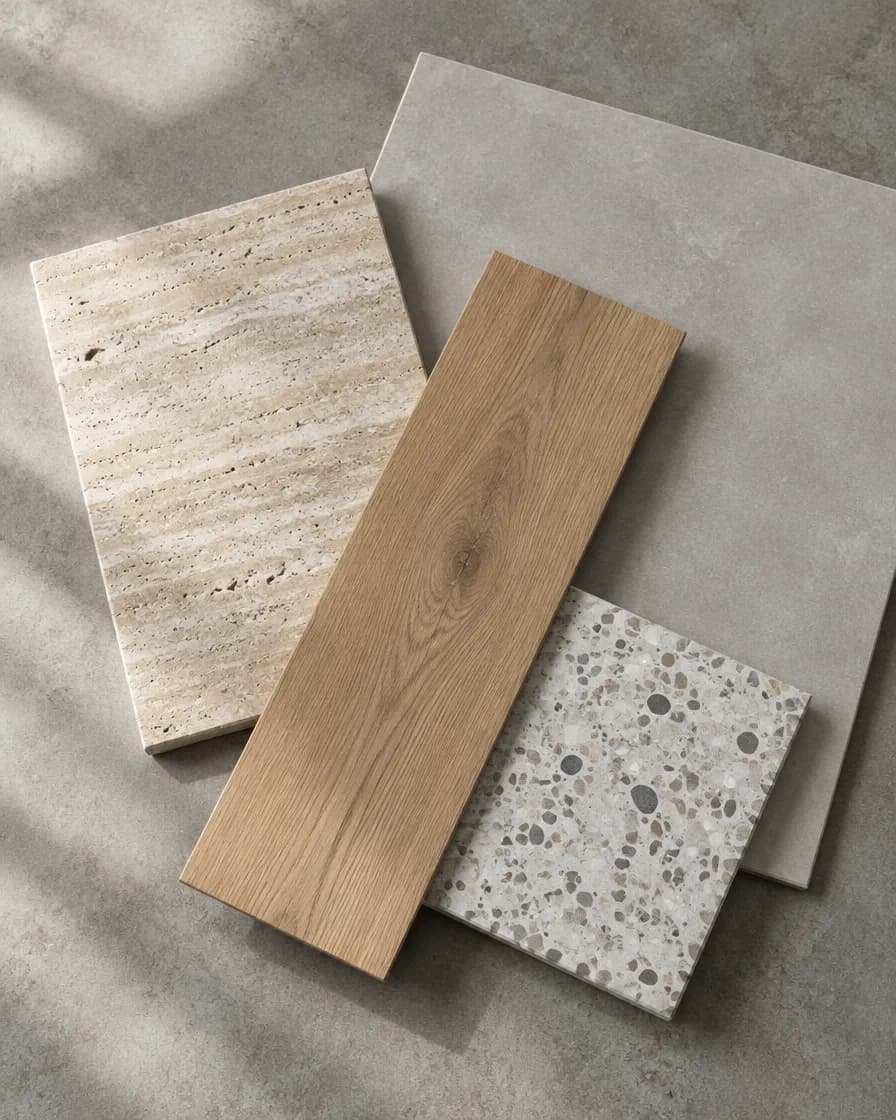
Porcelain tile copes with sand, heavy use and wet cleaning. Engineered wood feels warmer underfoot but reacts to humidity, so it suits rooms that stay air-conditioned. Part K of the Dubai Building Code requires villa air conditioning to be capable of holding 22.5 to 25.5 °C and 30% to 60% relative humidity for 95% of the year, so check the flooring maker's humidity range against those figures.
Laying new flooring over old tiles saves demolition, but it raises the floor level, which can mean trimming every door and losing ceiling height. Running one floor finish through several rooms at once avoids thresholds and mismatched batches.
Joinery made to measure
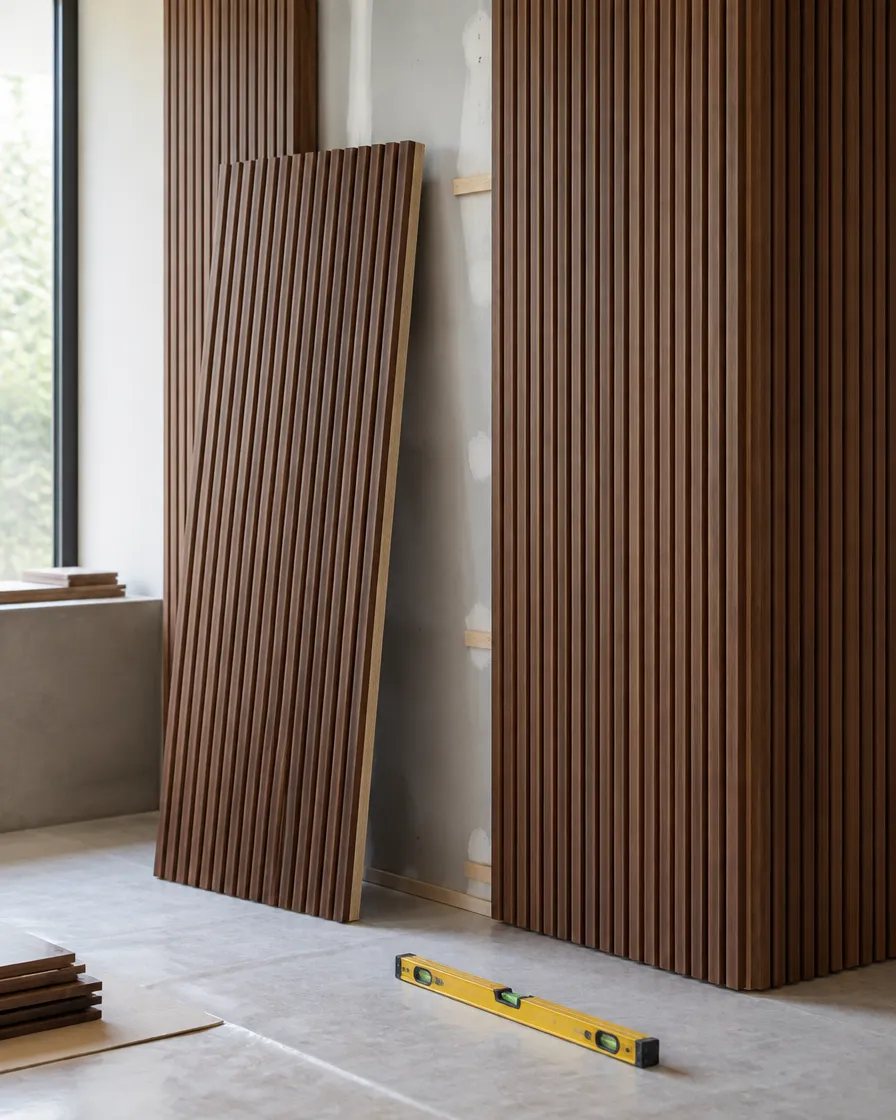
Wardrobes, vanity units and wall panelling are built after the site is measured, and they go in near the end, once ceilings, flooring and paint are done. Ask the partner contractor for joinery drawings with materials, finishes and hardware listed, so you approve exactly what gets built before the workshop cuts anything.
Approvals for interior work
Interior work still needs permission in many places. In an apartment, building management usually wants a NOC. In Arabian Ranches, Emaar Community Management says interior painting and regular maintenance do not need a NOC, but the contractor needs an entry permit, and in Emirates Living it says any alteration to the villa needs Emaar's approval through Home Modifications.
Tenants have a route for decoration work. Article 18 of Dubai Law No. 26 of 2007 says the landlord must provide the approvals a tenant needs to submit to the authorities for decoration works that do not affect the structure, and Article 19 still requires the landlord's permission first. The partner contractor confirms what your building or community asks for.
Questions
What is an interior renovation?
Work on the inside surfaces and fittings of a home: floors, ceilings, walls, lighting and joinery. It usually keeps the layout and leaves the building's structure alone.
Does interior renovation include kitchens and bathrooms?
It can, but those rooms add plumbing, drainage and waterproofing. Include them in the same enquiry and the partner quotes the whole scope together.
How much ceiling height does a false ceiling have to leave?
The Dubai Building Code sets a minimum clear height of 2.7 m in living rooms and bedrooms, measured from the finished floor to the lowest part of the ceiling, including bulkheads.
Can interior renovation be done one room at a time?
Yes, and it suits a home you are living in. Flooring is the exception worth planning: running one floor finish through several rooms at once avoids thresholds and mismatched batches.
Do I need approval for interior renovation in Dubai?
Often. Apartment buildings commonly require a NOC, and managed villa communities approve alterations. Interior painting and regular maintenance can be exempt, depending on the community.